Why the reef needs help
A beautiful reef, and an invader.
The Belize Barrier Reef, about 300 kilometers long, is the heart of the Mesoamerican Reef and a UNESCO World Heritage Site. Its grazing fish keep algae off the coral, and its young fish are the next generation that fishing families depend on.
Lionfish come from the Indian and Pacific Oceans. They reached Belize in 2008, and here almost nothing eats them. They eat the young fish the reef needs.
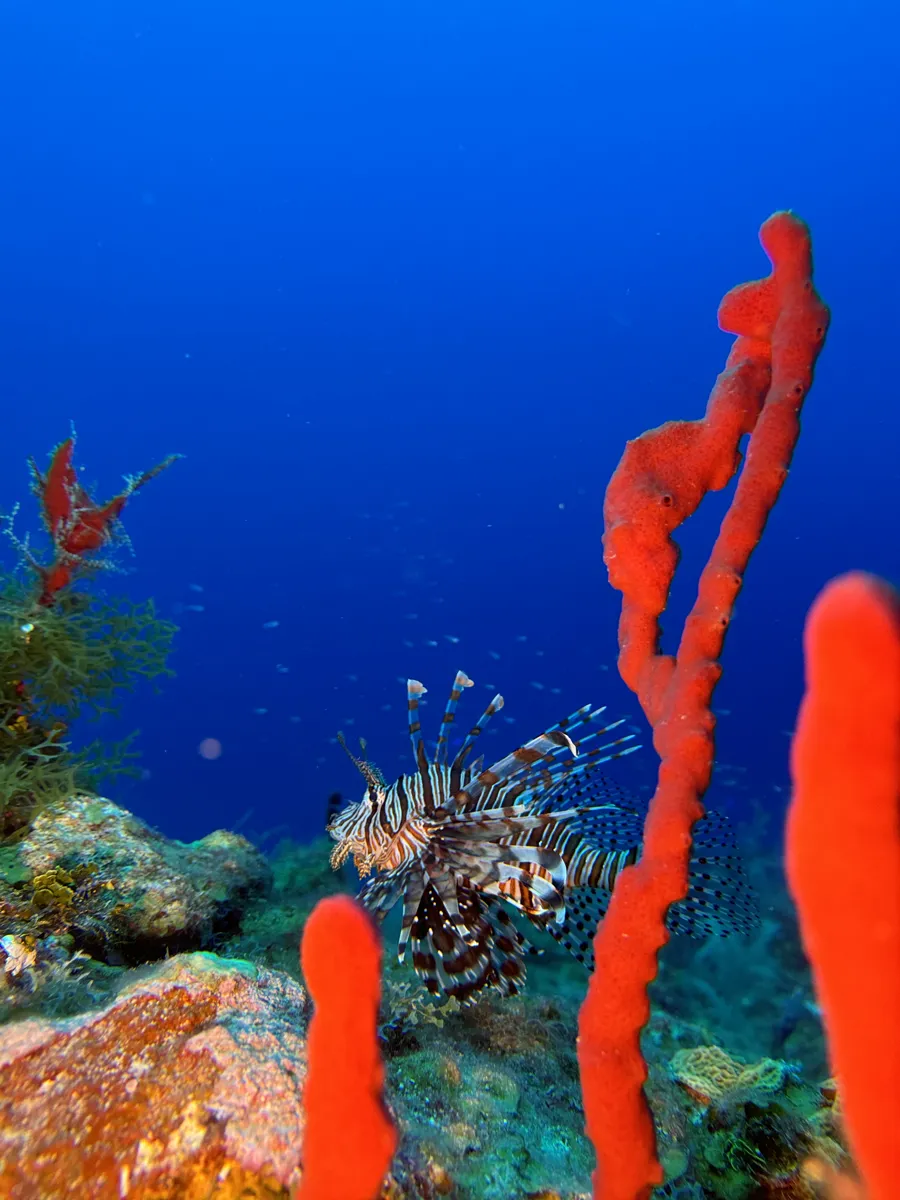
eggs a year from a single female lionfish.
how far a lionfish stomach can stretch, so it can eat fish up to half its length.
drop in young native fish on test reefs after lionfish moved in, in five weeks.
venomous spines, which keep almost every predator away.
The 79% figure is from Albins and Hixon, 2008.
How we help
One lionfish at a time.
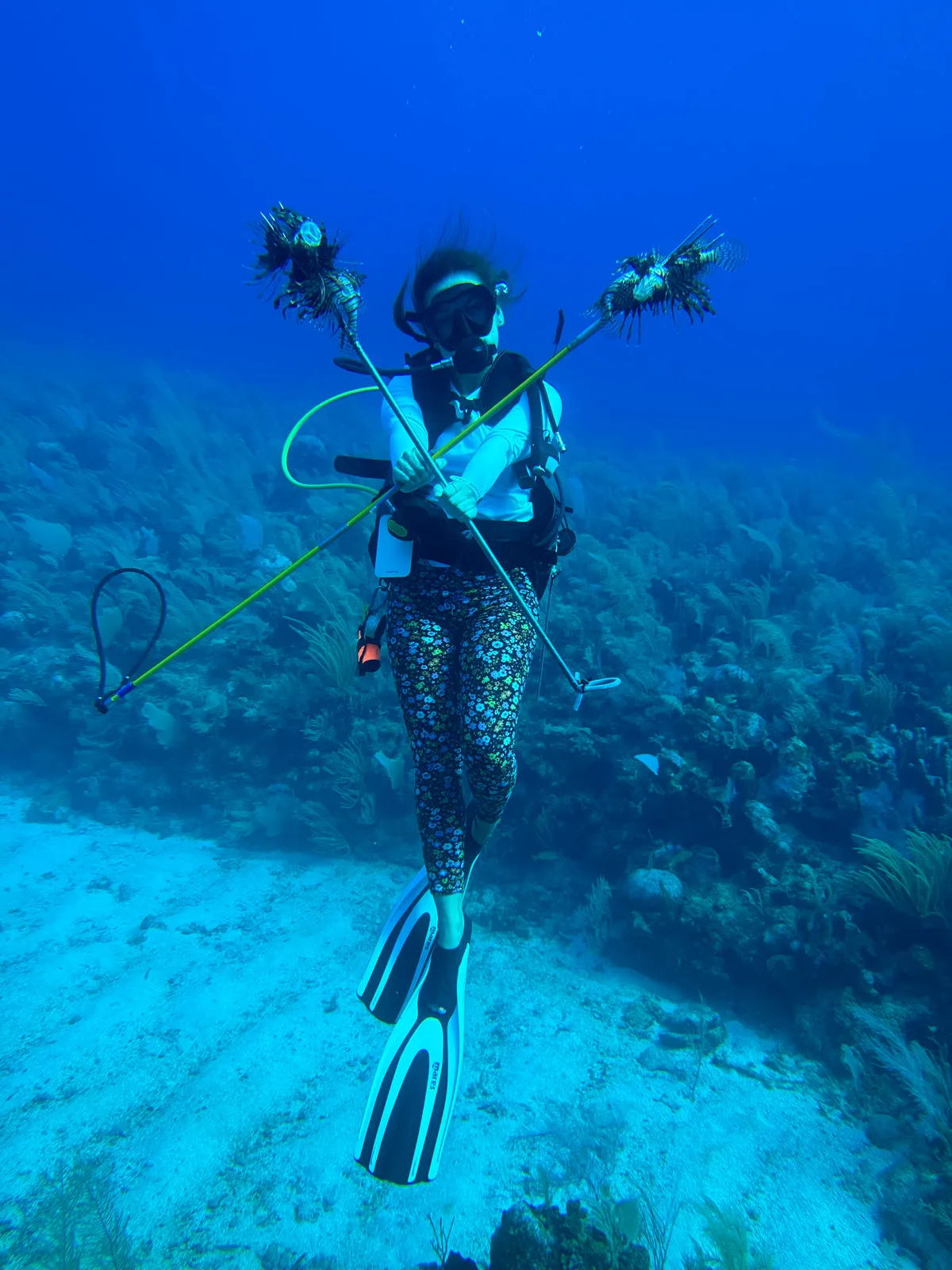
No one can remove every lionfish, but steady removal keeps their numbers down on the reefs that matter most. Trained, certified Belizean divers hunt them with spears, and we buy lionfish from local fishers too.
Nothing is wasted: the fins become jewelry, the meat feeds local families and restaurants, and the rest becomes pet treats. We also dissect lionfish to record what they eat, and share that data with the Belize Fisheries Department and TIDE.