Lionfish removal
Close to 1,000 pounds a month, off the reef.
Spearfished by a local crew, bought from local fishers, and used nose to tail: jewelry, meals and pet treats.
The oldest and largest thing we do
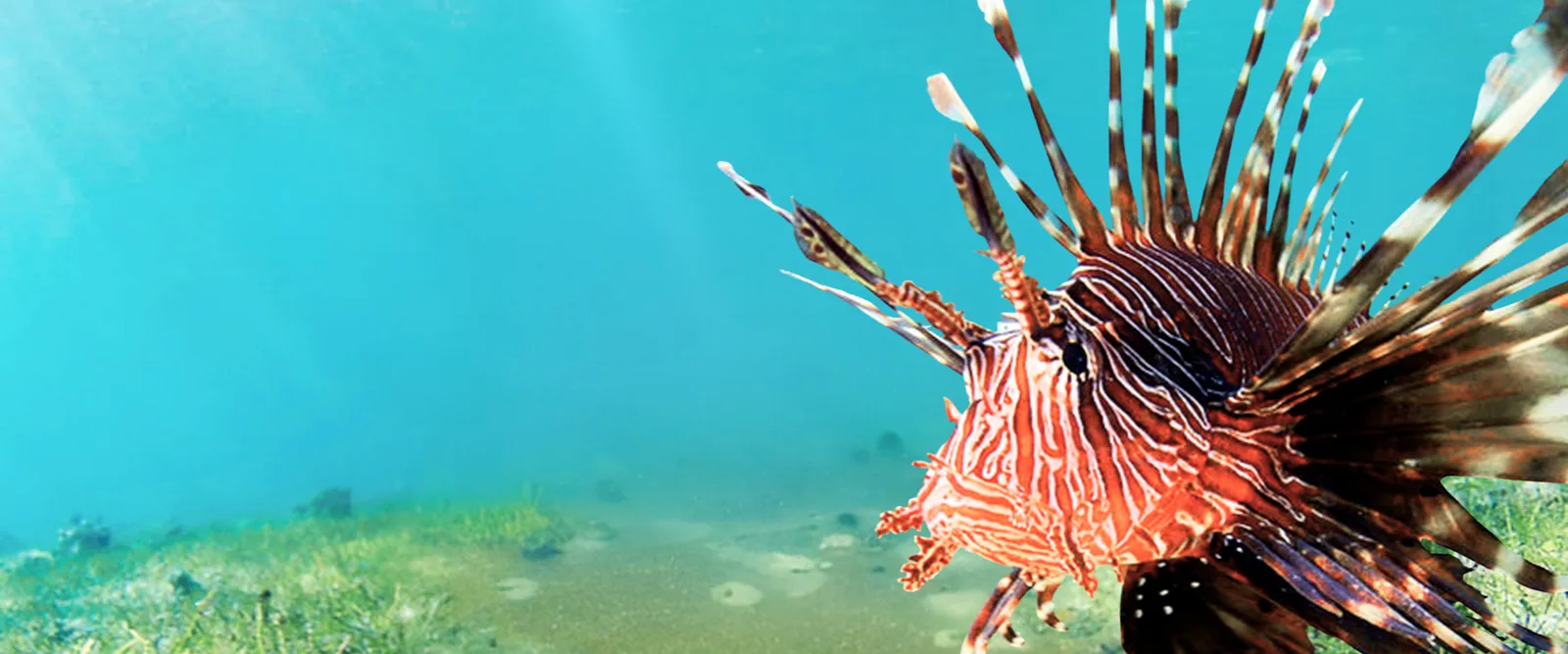
Lionfish are an invasive species on the Belize Barrier Reef. They eat juvenile fish, including the young herbivores that graze algae off the reef and keep space open for coral. Removing them protects the fish that keep the reef clear.
Since 2022 our crew has removed lionfish by spearfishing across southern Belize, and we also buy lionfish from local fishers at competitive market prices, which puts income into fishing households. The current rate is close to 1,000 pounds a month.
Nose to tail
Diving
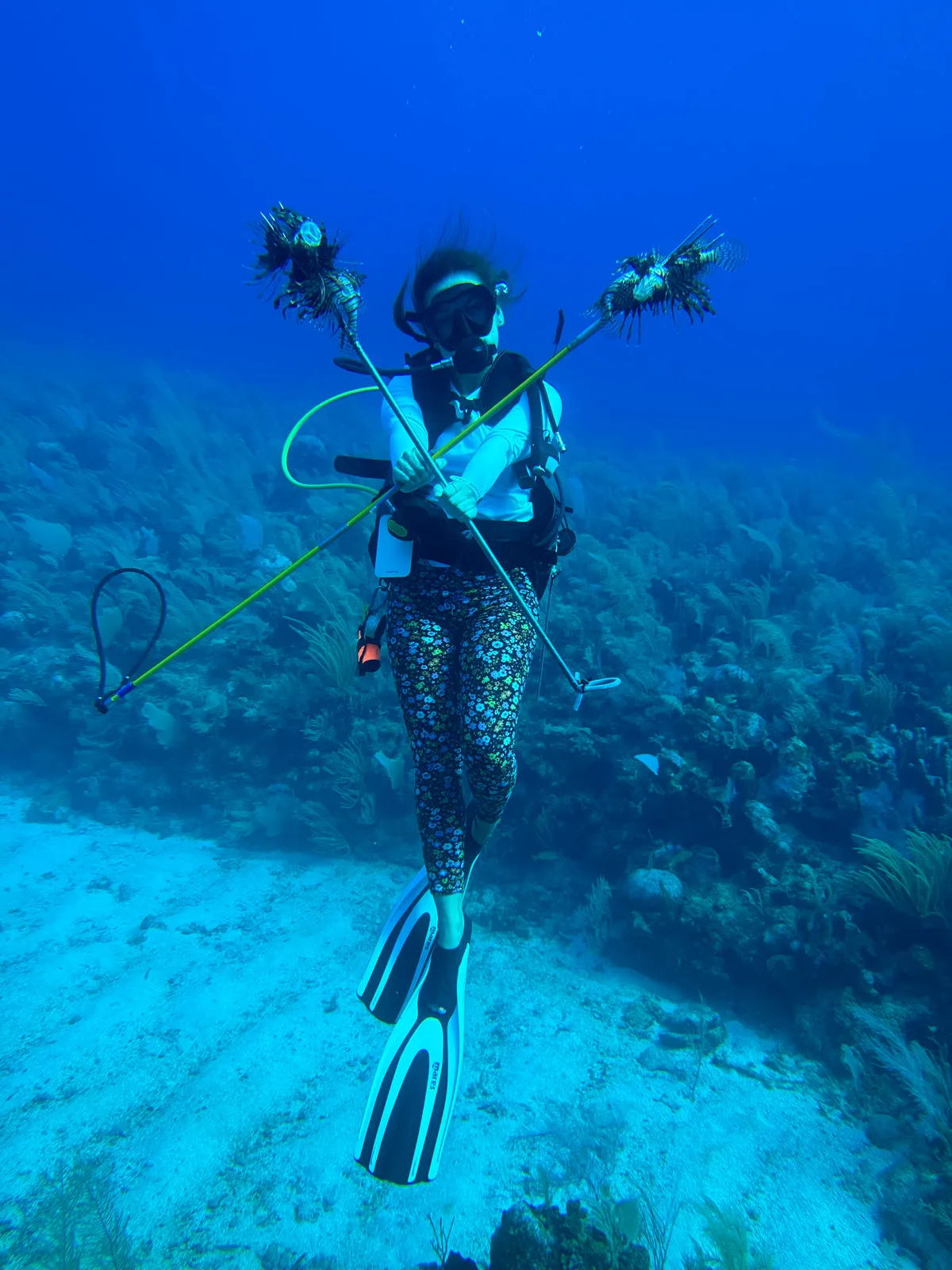
Every piece begins with a conservation dive. Trained local divers remove lionfish from the reef.
Processing
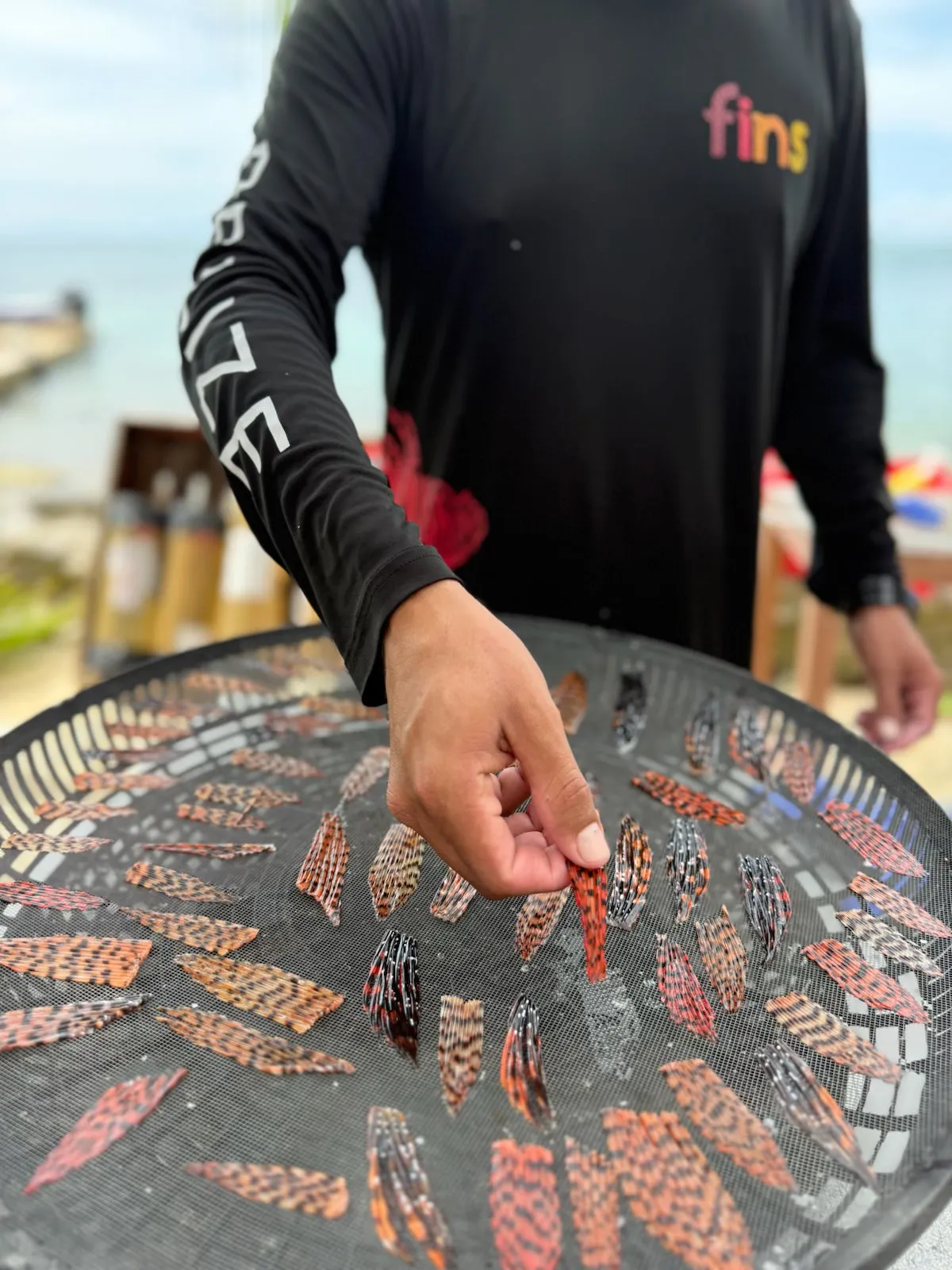
Back on shore the fish is used nose to tail. Fins are clipped for jewelry, the meat is prepared for local meals and restaurants, and the remaining material goes to Pezzy Pets for high-protein pet treats under a guaranteed-purchase partnership.
Preparing
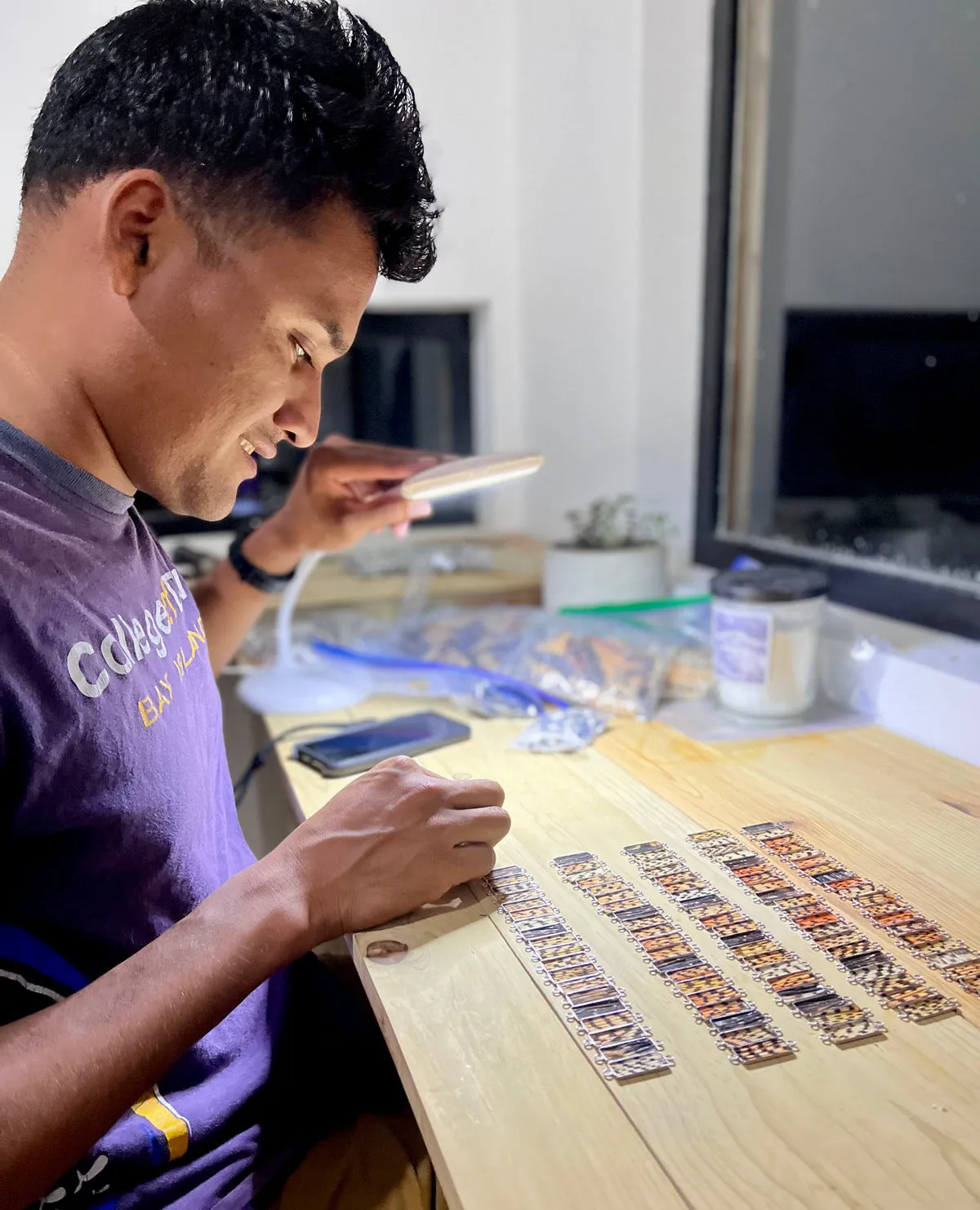
Fins are dried in the shade to keep their colour, then trimmed and set into stainless steel bases.
Crafting
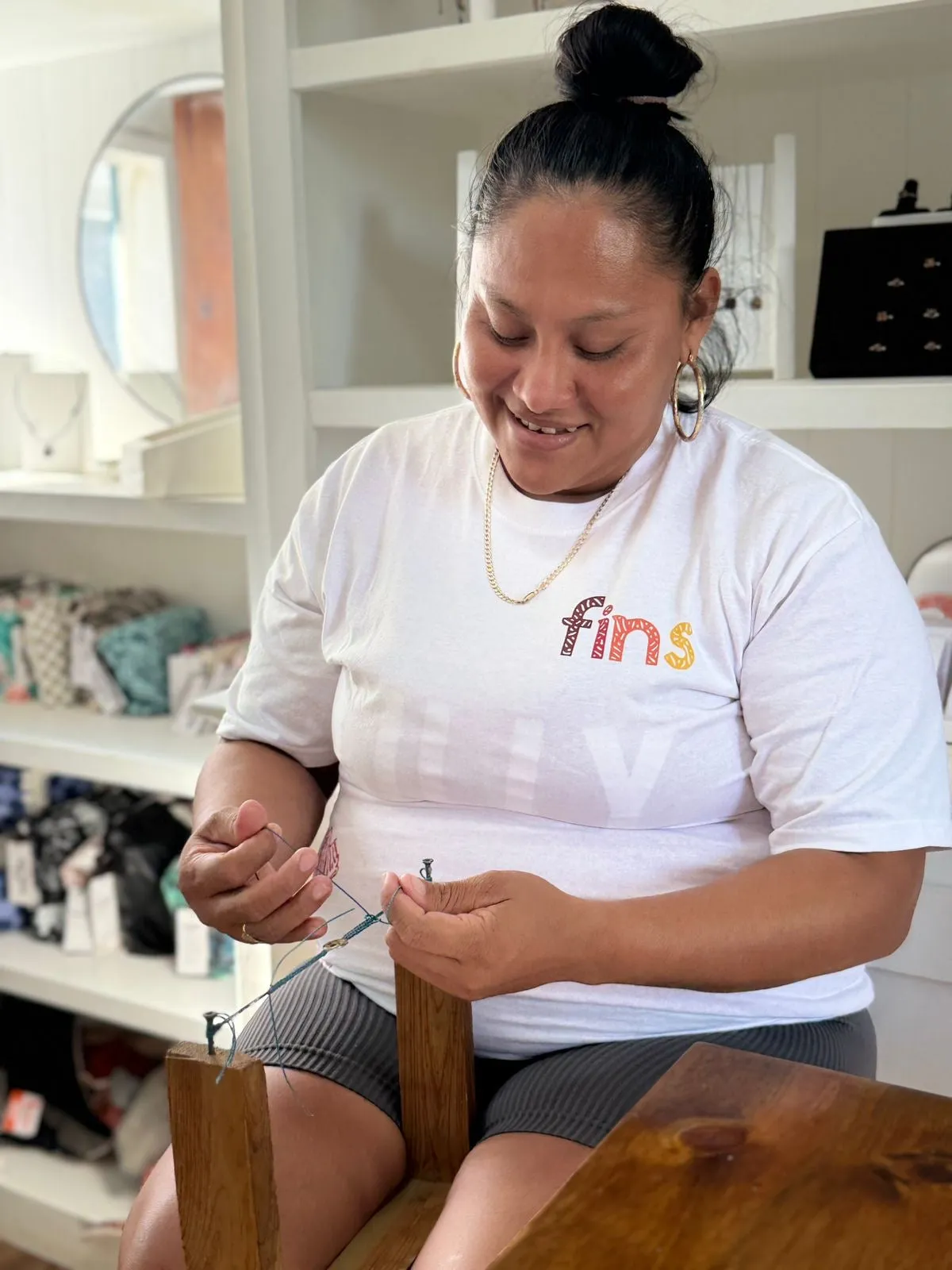
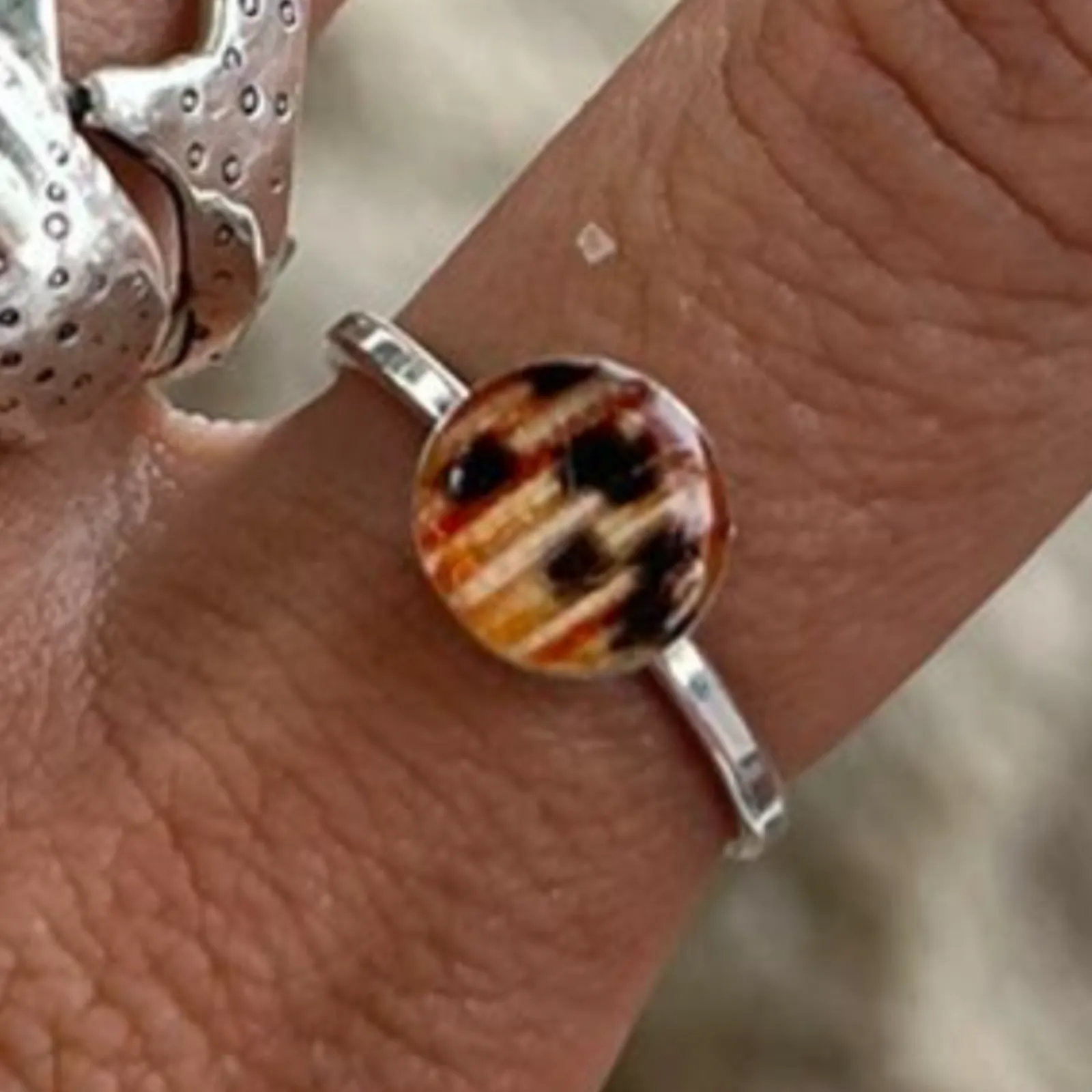
Every piece is handmade in Belize by our artisans. That's the bracelet or necklace in the shop.
The hunters
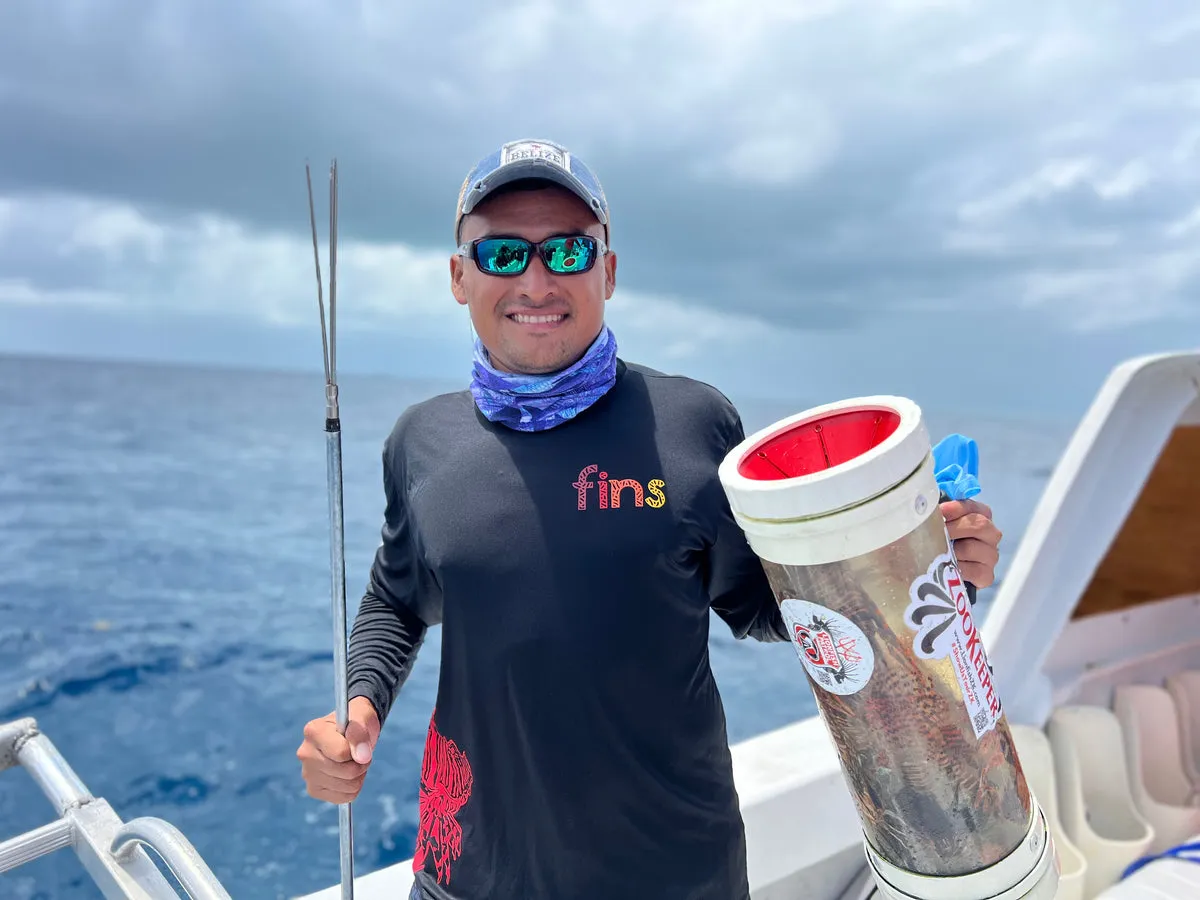
The crew is entirely Belizean. Hunters are trained and certified divers. FINS paid Splash to train three self-reliant scuba instructors, who in turn train the hunters, so the skills stay in the community.
Willie Caal, co-founder and conservation director, has spent more than ten years in marine conservation in southern Belize and leads the field work. Marvin "Bigs" Caal manages the lionfish program, captains the boat and is one of our top hunters. Luis Castillo hunts with us.
What the fish tell us
We collect and dissect lionfish to record what they've been eating. The stomach contents document the juvenile commercial and herbivorous fish that lionfish take off the reef. That dataset is being compiled to share openly with the Belize Fisheries Department, TIDE and other partners, and there is a DNA research collaboration with NC State University.
In plain terms: the sampling shows which reef fish are being lost to lionfish, and that makes the case for removal with evidence rather than assertion.
Where we hunt
Every dive site the crew works, colored by how recently we were there. Green means we dived it in the last two weeks, yellow means two to four weeks ago, and red means it is overdue for another visit.
Dive with us
Lionfish dive trips run with our tour partners out of Placencia and Independence. Tell us when you're coming and we'll put you in touch.